
Patient testimonials
Stories of real survivors living with the HAI pump

Colorectal cancer liver metastases survivor
Going from having unresectable tumors before HAI…



Colorectal cancer liver metastases survivor
Since receiving the pump, I’ve continued to teach...


Patient materials
Educational materials to help you learn about HAI therapy:
Patient FAQs
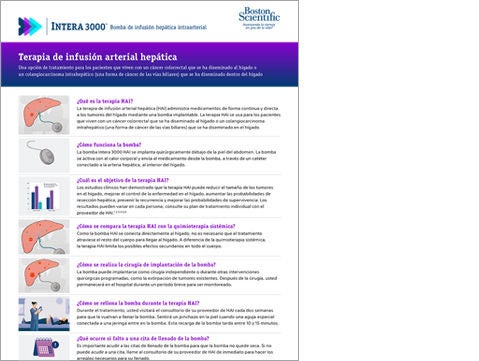
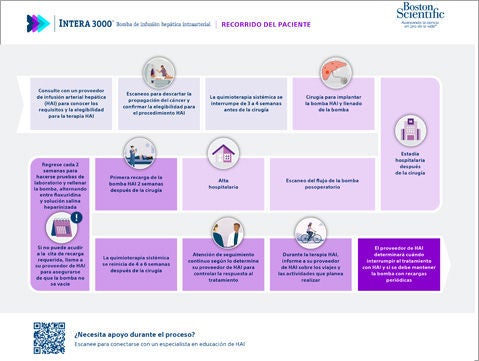
Responses to frequently asked questions about HAI therapy
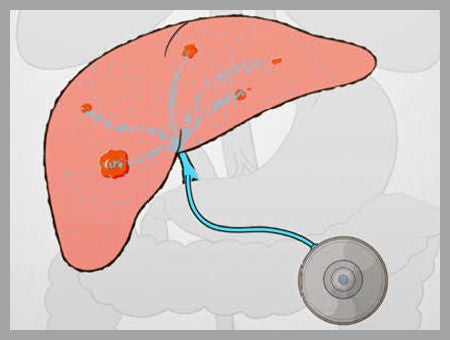
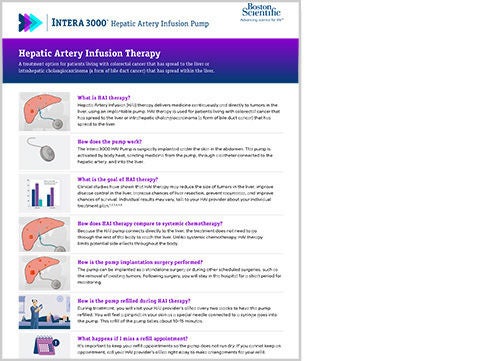
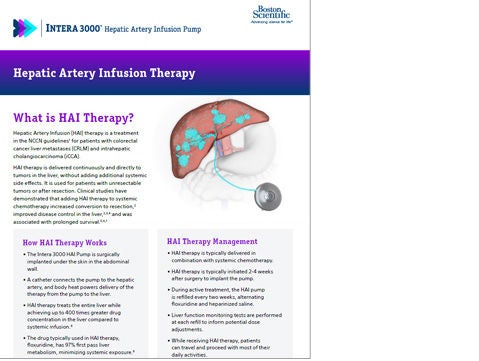
Hepatic Artery Infusion (HAI) therapy delivers medicine continuously and directly to tumors in the liver, using an implantable pump. HAI therapy is used for patients living with colorectal cancer that has spread to the liver or intrahepatic cholangiocarcinoma (a form of bile duct cancer) that has spread to the liver.
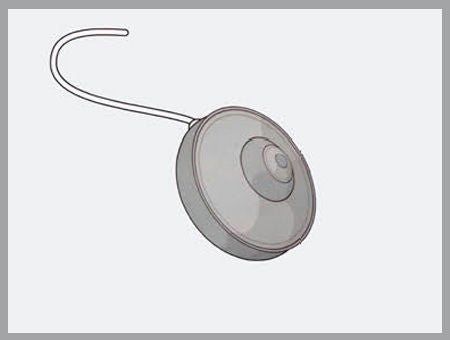
The Intera 3000 HAI Pump is surgically implanted under the skin in the abdomen. The pump is activated by body heat, sending medicine from the pump, through a catheter connected to the hepatic artery, and into the liver.
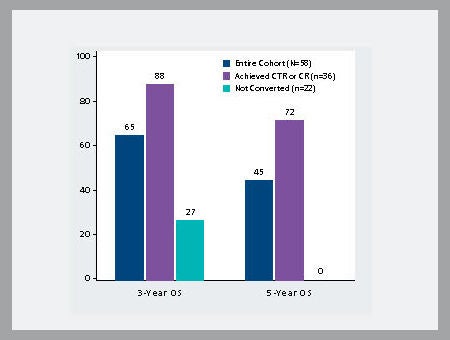
Clinical studies have shown that HAI therapy may reduce the size of tumors in the liver, improve disease control in the liver, increase chances of liver resection, prevent recurrence, and improve chances of survival. Individual results may vary, talk to your HAI provider about your individual treatment plan.1,2,3,4,5,6
Because the HAI pump connects directly to the liver, the treatment does not need to go through the rest of the body to reach the liver. Unlike systemic chemotherapy, HAI therapy limits potential side eff ects throughout the body.
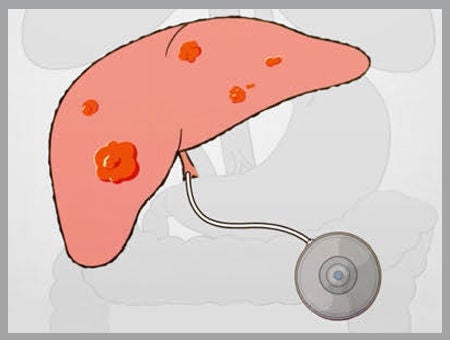
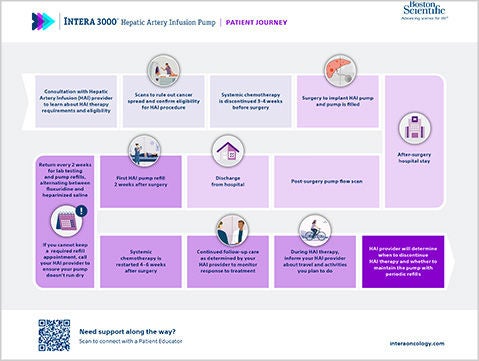
The pump can be implanted as a standalone surgery or during other scheduled surgeries, such as the removal of existing tumors. Following surgery, you will stay in the hospital for a short period for monitoring.
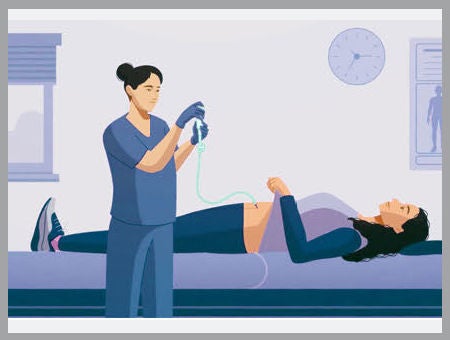
During treatment, you will visit your HAI provider’s office every two weeks to have the pump refilled. You will feel a pinprick in your skin as a special needle connected to a syringe goes into the pump. This refill of the pump takes about 10-15 minutes.

It’s important to keep your refill appointments so the pump does not run dry. If you cannot keep an appointment, call your HAI provider’s office right away to make arrangements for your refill.
Every two weeks, the pump is filled either with floxuridine or heparinized saline. Floxuridine, the chemotherapy used in the pump, has properties that limit its circulation outside of the liver.
At every refill appointment, your HAI provider will perform liver function monitoring tests based on a simple blood draw, and your provider will adjust dosage if needed.

After you recover from surgery, you’ll be able to continue most of your daily activities. Avoid rough physical activity to protect the pump site. Changes in body temperature (e.g., due to using a heating pad) or elevation may aff ect the pump’s flow rate. Talk to your HAI provider about your activities.

You can continue to travel while living with the pump. If you will be at a different location for over two weeks during treatment, talk to your HAI provider about a plan for your refills.

You will receive a Patient Identifi cation Card that you should carry with you. It may be useful:
• To show to your radiologist when having an MRI
• If you are traveling and need to receive medical care
• To show to airport security when traveling

HAI therapy is covered by most major insurance providers. You will need to talk to your insurance provider to verify your individual coverage and benefits.

Your pump will remain in place for the duration of your therapy, which depends on your response to treatment. When not receiving therapy, refi ll visits can be extended to every few months. Talk to your HAI provider about your individual treatment plan.
1. Kemeny N et al. N Engl J Med. 1999;341(27):2039-48. • 2. Dhir M et al. Ann Surg Oncol. 2017;24(1):150-158. • 3. Groot Koerkamp B et al. J Clin Oncol. 2017;35(17):1938-1944. •4. Pak L et al. J Surg Oncol. 2018;117(4):634-643. • 5. Holster J et al. Ann Surg Oncol. 2022;29(9):5528-5538. • 6. Franssen S et al. Ann Surg Oncol. 2024;31(1):115-124.
Patient newsroom
News stories about HAI patient experiences
Patient news stories






- Story1
- Story2
- Story3
- Story4
- Story5
- Story6
Patient education webinars
Webinars describing HAI therapy for a patient audience


Patient support websites
Note: By clicking the links below, you will be redirected to external websites. The content of these websites is not reviewed by Boston Scientific.

Take the next step
Ready to learn more? Take a short quiz to connect with a patient educator.
Individual results may vary. Therapy using the Intera 3000 Hepatic Artery Infusion (HAI) Pump is available through prescription only. Talk to your physician about the risks and benefits of the therapy and find out if the Intera 3000 HAI Pump is right for you.
Indications, safety and warnings
The Intera 3000 Hepatic Artery Infusion Pump is used to deliver medications such as chemotherapy to the blood vessels in the liver. With all medical procedures, there are risks associated with the procedure to place the pump in your abdomen and with the use of the pump to deliver medications. The risks associated with placement and use of the pump include but are not limited to bleeding, blood clots, blockage within the device, damage to the blood vessels, fluid or blood build-up around the device under the skin, infection, movement or displacement of the pump or catheter, pump damage, and leakage or incorrect delivery of the medications. Special care may be required after placement of the Intera 3000 Pump and includes but is not limited to avoiding rough physical activity, avoiding deep sea or scuba diving, avoiding saunas, avoiding long periods in hot tubs and avoiding direct sun exposure, heating pads or hot water bottles over the area of your abdomen where the pump is placed. Additional care may be needed for air travel, moving to or visiting a high-altitude place, or if you have a fever. The Intera 3000 Pump is MRI Conditional, which means that certain conditions must be met to safely have an MRI after placement of the pump. Be sure to talk with your doctor so that you thoroughly understand all of the risks and benefits associated with the use of the device. PI-2257307-AA