
An HCC diagnosis can be daunting.
But everyone’s path is unique. Finding your path begins with taking the first step.
If you or a loved one has been diagnosed with hepatocellular carcinoma (HCC), you are probably trying to understand more about what the diagnosis means for you, how it may impact your life and what you should do next. Treatment options are available.
For people with HCC, TheraSphere™ Y-90 Glass Microspheres may be an option. TheraSphere precisely treats liver tumors by delivering millions of tiny glass beads containing yttrium-90, or Y‑90 radiation, directly to the blood vessels that feed the tumor. These beads target the tumor from the inside, which helps limit impact on healthy liver tissue. The treatment is minimally invasive and is usually done as an outpatient procedure.
The first step toward determining if TheraSphere may be an appropriate part of your treatment plan is to consult with your care team. The goal of treatment with TheraSphere will be unique to every patient. Whether TheraSphere is the only treatment needed to shrink the tumor or a part of a larger treatment plan, your doctor will work with you on the best plan for your condition to help you move forward with confidence.
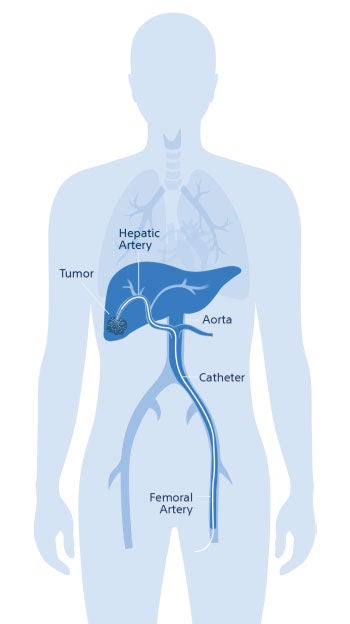

For people with HCC, TheraSphere Y-90 Glass Microspheres may be an option.
How it works

Could TheraSphere be right for you?
A few quick questions can help you understand whether TheraSphere may be an option to discuss with your care team.

TheraSphere creates possibilities

150,000+
TheraSphere treatments worldwide

25 years
of clinical evidence for Y-90 therapies

FDA-
Approved
and available at treatment centers around the country

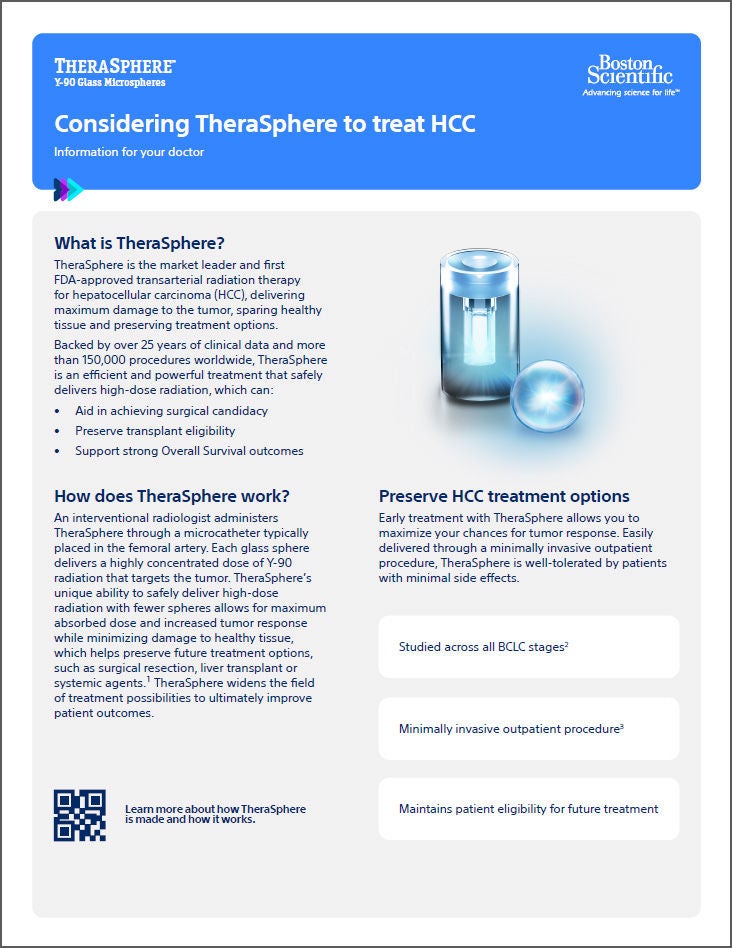
Talk to your doctor about TheraSphere



Take the next step
Ready to learn more? Take a short quiz to connect with a patient educator.
TheraSphere is a registered trademark of Theragenics Corporation used under license by Boston Scientific Medical Device Limited, a wholly owned indirect subsidiary of Boston Scientific Corporation.
Important Safety Information for TheraSphere
TheraSphere Microspheres are small radioactive glass beads that treat liver cancer. With all medical procedures, there are risks associated with the procedure and the use of the device. Although the radioactivity continues to go down over time, the glass beads will remain permanently in your liver. The risks include but are not limited to: • Bleeding from the stomach or intestines • Fatigue (feeling very tired) • Fever • Infection • Loss of appetite • Mild abdominal discomfort • Nausea • Radiation damage to other locations (including but not limited to lungs, gallbladder, stomach, intestines) • Stomach or intestinal ulcer • Temporary changes in liver and blood tests • Vomiting Rarely the treatment may cause worsening of your liver function that could lead to liver failure and death. Tell your doctor if side effects continue or get worse. Be aware that some side effects may last longer or, rarely, become permanent. Everyone responds differently to their treatment. These are not all the possible side effects you may feel. Contact your doctor if you experience any side effects. Be sure to talk with your doctor so that you thoroughly understand all of the risks and benefits associated with the use of the device. 97574929B