
Tumors in the liver can be a challenge.
If you or a loved one has been diagnosed with colorectal or bile duct cancer (intrahepatic cholangiocarcinoma) that has spread to the liver, you may want to consider Hepatic Artery Infusion (HAI) therapy.
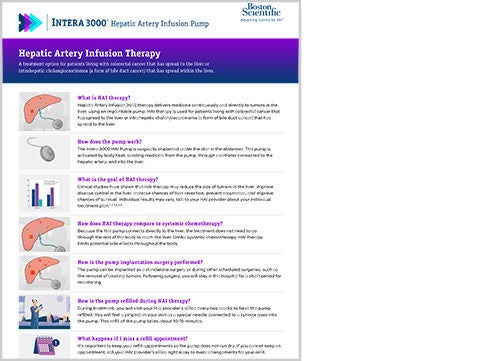
Clinical studies have shown that HAI therapy may reduce the size of tumors in the liver, improve disease control in the liver, increase chances of liver resection, prevent recurrence, and improve chances of survival.1,2,3,4,5,6
HAI therapy delivers medicine continuously and directly to tumors in the liver, using an implantable pump. The Intera 3000 HAI pump, which is FDA-approved, is surgically implanted under the skin in the abdomen. The pump is activated by body heat, sending medicine straight from the pump to the liver.
This localized delivery provides up to 400 times higher drug concentration to the liver compared to traditional chemotherapy.7 Since the treatment does not need to go through the rest of the body to reach the liver, HAI therapy does not add additional systemic side effects.8
HAI therapy is for patients whose tumors are contained within the liver. In some cases, if spread outside of the liver is limited, HAI therapy may be considered. Speaking with an HAI provider will help you know if you are eligible for HAI therapy.
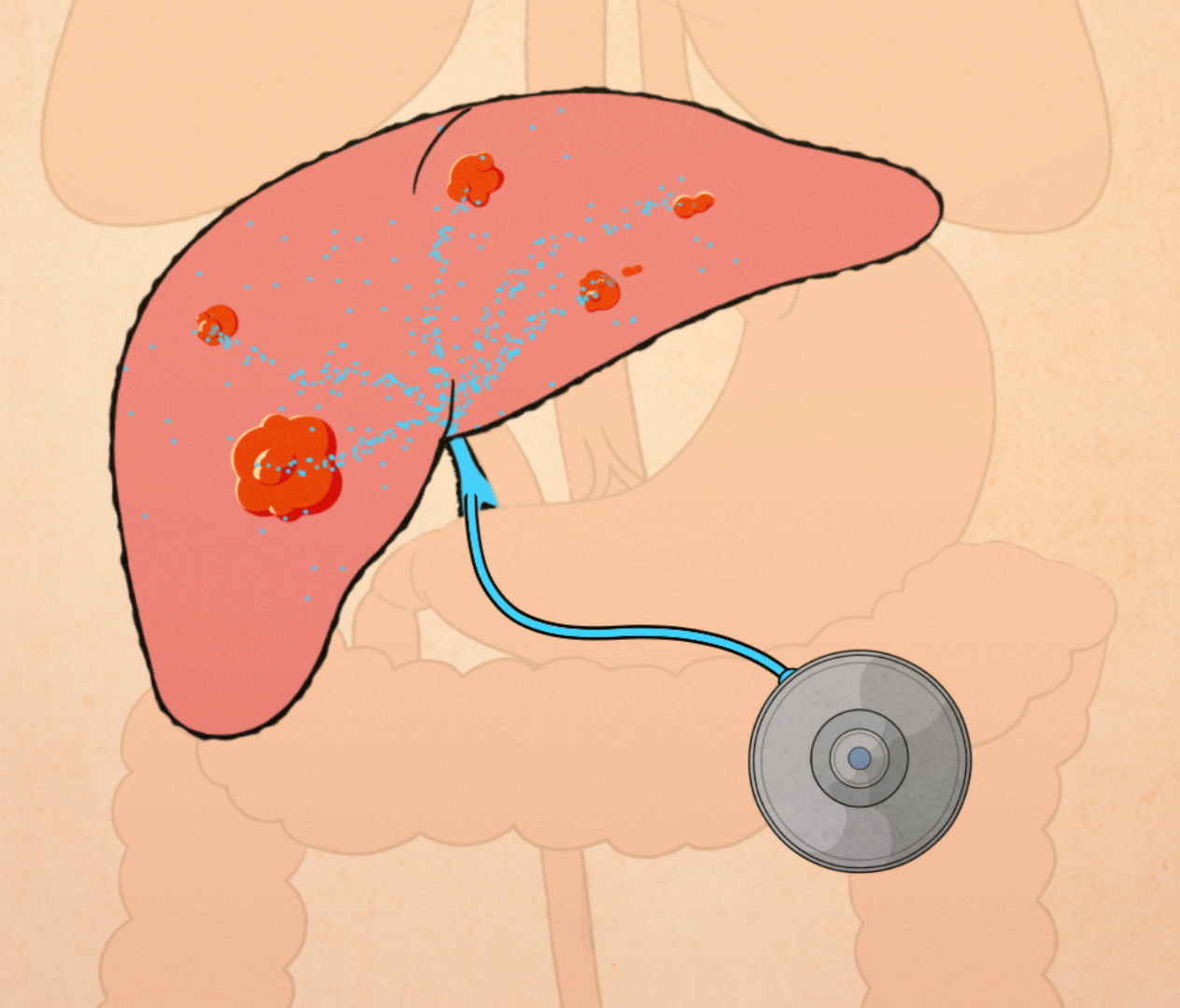

For people with colorectal or bile duct cancer that has spread to the liver, HAI therapy may be an option.
How it works

Could HAI therapy be right for you?
A few quick questions can help you understand whether HAI therapy may be an option to discuss with your care team.

HAI therapy could be a next step

In NCCN Guidelines9
and available at treatment centers around the country

Dozens
of peer-reviewed publications with evidence for HAI therapy
Resources for those considering HAI therapy
Real experiences with HAI therapy
Hear from patients who have had HAI therapy – and how it has impacted their lives.
Four patient stories come together

“Being told I was a candidate for surgery felt like a second shot at life.”
– Thomas
Hope’s full story
“You are a key factor to be your own advocate.”
– Hope

Take the next step
Ready to learn more? Take a short quiz to connect with a patient educator.
References
1. Dhir M et al. Ann Surg Oncol. 2017;24(1):150-158.
2. Franssen S et al. Ann Surg Oncol. 2024;31(1):115-124.
3. Groot Koerkamp B et al. J Clin Oncol. 2017;35(17):1938-1944.
4. Holster J et al. Ann Surg Oncol. 2022;29(9):5528-5538.
5. Kemeny N et al. N Engl J Med. 1999;341(27):2039-2048.
6. Pak L et al. J Surg Oncol. 2018;117(4):634-643.
7. Ensminger W et al. Semin Oncol.1983;10(2):176-182.
8. D’Angelica M, Lidsky M. Hepatic Arterial Infusion for Malignancy. 2025.
9. NCCN Clinical Practice Guidelines in Oncology for Colon Cancer (V2.2026) and Biliary Tract Cancers (V1.2026).
Important Safety Information for HAI
The Intera 3000 Hepatic Artery Infusion Pump is used to deliver medications such as chemotherapy to the blood vessels in the liver. With all medical procedures, there are risks associated with the procedure to place the pump in your abdomen and with the use of the pump to deliver medications. The risks associated with placement and use of the pump include but are not limited to bleeding, blood clots, blockage within the device, damage to the blood vessels, fluid or blood build-up around the device under the skin, infection, movement or displacement of the pump or catheter, pump damage, and leakage or incorrect delivery of the medications. Special care may be required after placement of the Intera 3000 Pump and includes but is not limited to avoiding rough physical activity, avoiding deep sea or scuba diving, avoiding saunas, avoiding long periods in hot tubs and avoiding direct sun exposure, heating pads or hot water bottles over the area of your abdomen where the pump is placed. Additional care may be needed for air travel, moving to or visiting a high-altitude place, or if you have a fever. The Intera 3000 Pump is MRI Conditional, which means that certain conditions must be met to safely have an MRI after placement of the pump. Be sure to talk with your doctor so that you thoroughly understand all of the risks and benefits associated with the use of the device. PI-2257307-AA