
"Going from having unresectable tumors before HAI therapy to being told I was a candidate for surgery felt like a second shot at life."
- Thomas
Thomas: Colorectal cancer liver metastases survivor
When Thomas was diagnosed with advanced colorectal cancer at age 37, his kids were 5 and 8 and living out of state with their mom. Thomas and his partner quickly moved to be closer to his kids, and he started care at a new cancer center. A surgical oncologist there told Thomas about HAI therapy, and he decided to move forward with having an HAI pump placed.
Just months earlier, he had low energy and no appetite. But while undergoing HAI therapy, he was able to resume the activities he enjoyed, like fishing and playing the keyboard in a local band. On a road trip, he learned that his medical team believed his tumors had shrunk enough for surgery.
His liver metastases and primary colon tumor were resected, and Thomas was in clinical remission. “I think it’s important that patients have access to HAI therapy as an extra tool in their fight against cancer and as a way to really deliver medicine directly to the area where they most need it,” said Thomas.
During and after his HAI treatment, Thomas especially appreciated the chance to be close to his kids. Now he is passing on his love of music and enjoying everyday activities with them.
“I was excited to take my daughter to Red Rocks,” said Thomas. “We had the most amazing time listening to music and being in such a gorgeous place.”

"When I talk to other patients, I always say to look at second and third opinions. I went for a second opinion and I was able to find HAI therapy.”
- Rick
Rick: Intrahepatic cholangiocarcinoma survivor
After cardiac surgery, Rick developed pain in the area around his liver. An MRI revealed a mass, and Rick was diagnosed with bile duct cancer within his liver (intrahepatic cholangiocarcinoma). His doctors recommended aggressive systemic chemotherapy. After months of this regimen, decided to look at other options.
After multiple consultations, Rick learned about HAI therapy. He decided to move forward with surgery to implant the pump and began receiving HAI therapy. Rick said, “Every part of my life and body felt so much better.” He recalls the pump refill process as being short and straightforward, and he felt more energetic each day. Nine months later, Rick’s doctors told him he was ready for resection.
Rick believes getting a second opinion was a critical step in his treatment journey. Now, Rick is a mentor for other patients who are navigating a diagnosis of cholangiocarcinoma. He mentors as part of the Cholangiocarcinoma Foundation’s Cholangio Connect program.
At home, he focuses on the things he loves, including playing golf, traveling, and being with his granddaughters. Thinking of his granddaughters, Rick said, “I cherish the times we have together, and I think they cherish me too.” And his daughter Kacey remembers him being there for an important moment her life. “I did a first look with my dad on my wedding day, which I never thought I would be able to do,” said Kacey. “It was a really special day.”

"I decided that I needed to be the CEO of my own treatment. Getting a pump is a powerful treatment that I would choose again if I had to do it all over."
- Marsha
Marsha: Colorectal cancer liver metastases survivor
"It all started with stomach pains that grew worse over time, until one day, it felt like somebody was stabbing me with knives," Marsha recalled. After a series of tests, she was diagnosed with colorectal cancer. She was 41 with two children, ages five and seven. "Cancer wasn't supposed to happen to me, but it did."
After multiple rounds of systemic chemotherapy, a tumor re-emerged in Marsha’s liver. She was referred to a liver surgeon, who recommended surgery immediately. "I'd heard of HAI therapy through a friend who had received it and had no evidence of disease for many years." Marsha asked the liver surgeon about it and was told HAI therapy was "overtreatment" in her case.
Nevertheless, she decided to seek a second opinion. The second surgeon strongly recommended liver resection and HAI therapy together. Her surgeon pointed to overall survival data for HAI therapy. Marsha was ready to move forward. "I wanted to do everything in my power to stay alive for my kids and put this disease behind me, and I felt unequivocally that this gave me my best chance."
Marsha had the pump implanted, along with a liver resection. Today, she is no longer in treatment and enjoys life with her family. "I am eternally grateful to the doctors that gave me access to this amazing therapy that has given me the best possible chance of survival."

"Since receiving the pump, I’ve continued to teach yoga regularly. I’m immensely grateful for time with my children that I’m the sole parent to.”
- Hope
Hope: Colorectal cancer liver metastases survivor
Hope has always pursued a lifestyle of being a yoga instructor, working out, and healthy eating. But she was unexpectedly diagnosed with rectal cancer that had spread to her liver. Her tumor mass was inoperable.
Hope started researching treatment options. “That’s the kind of person I am, my brain’s wired like that,” she said. Hope found out about HAI therapy and soon connected with a patient social media group for colorectal cancer liver metastases. There, she learned more by talking with patients and caregivers who had previously experienced HAI therapy.
When her initial provider did not have an active HAI program, she found another facility close to her that offered HAI therapy. Hope’s new provider thought she was a good candidate for HAI therapy, and Hope had her HAI pump implanted. As she continued HAI therapy, her tumor mass was shrinking, and her care team decided she was ready for resection.
Her initial tumor mass was completely removed during her surgery. Later, when Hope experienced a recurrence in her liver, her HAI therapy was reactivated because the pump was still present, and she subsequently returned to getting clear scans.
Hope continued teaching yoga and working out nearly every day since receiving her pump. She appreciated that HAI therapy did not add additional systemic side effects compared to IV chemo. While she has made some adjustments, Hope maintained her lifestyle and continued to pursue her passions.

"I’ve now been to all of my granddaughters’ college graduations. I’m grateful that I found a specialist who offered HAI therapy.”
- Peter
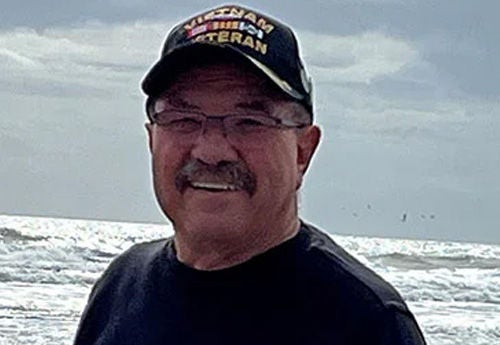
Peter: Colorectal cancer liver metastases survivor
Peter was working as a carpenter and had been putting off his colonoscopy for years. When he finally got one, he learned he had colorectal cancer that had spread to his liver. The first two oncologists he saw said he had less than two years to live.
“I’m a Vietnam veteran and former high school wrestler,” said Peter. “My attitude from day one was that this was just another battle for an old soldier to fight.”
Peter and his wife got an appointment for a second opinion. The specialist who they met with said that Peter was a good candidate for HAI therapy. He had an HAI pump implanted and soon began treatment. At one point during his treatment, his doctor did a scan to check the status of his tumors.
“When I saw her face, she was smiling,” said Peter. “She said all of the tumors were gone – there was nothing there to even operate on. According to her assessment, my HAI therapy had totally taken care of the tumors.”
His doctors restarted HAI therapy to keep tumors from coming back and then maintained his pump with glycerin in case he needed it in the future. Eventually, Peter had his pump removed. “When I was diagnosed at age 59, people didn’t think I would make it to 60, but I’ve celebrated my 75th birthday,” said Peter. “I’m grateful that I faced this challenge head-on.”
"While an implanted pump is a commitment, I was willing to make it after reading the clinical papers on the benefits the pump can provide.”
- Don
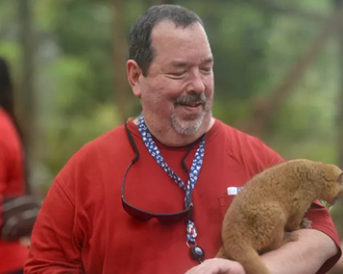
Don: Colorectal cancer liver metastases survivor
When visitors to Don’s home ask about the decorated Christmas tree behind his desk, it’s an opportunity for Don to talk about his pump. According to Don, his wife loves having Christmas decorations up. After his cancer diagnosis, they decided to keep Christmas around all year.
Don’s cancer journey started with a routine colonoscopy. After surgery to remove part of his colon, Don was concerned about the chance for recurrence. He pushed for a follow-up scan earlier than was recommended. The scan revealed tumors in his liver, and he was diagnosed with stage 4 cancer.
Don jumped right into investigating treatment options and the data surrounding them. The treatment that kept coming up was HAI therapy. Don gathered up his scans and records and went to meet doctors who perform pump implants. After assessing Don’s disease, they agreed that an HAI pump was an appropriate therapy for him. The following week, he had simultaneous liver resection and pump implantation. After Don recovered from the surgery, his oncologist used the pump for follow-up therapy for several months. He continues to have no evidence of disease.
Today, Don moderates an online support group for people with colorectal cancer liver metastases. He enjoys feeding birds and exploring new places. And the Christmas decorations remain in his living room now as a symbol of hope, success, and everyday joy.

Take the next step
Ready to learn more? Take a short quiz to connect with a patient educator.
Individual results may vary. Therapy using the Intera 3000 Hepatic Artery Infusion (HAI) Pump is available through prescription only. Talk to your physician about the risks and benefits of the therapy and find out if the Intera 3000 HAI Pump is right for you.
Indications, safety and warnings
The Intera 3000 Hepatic Artery Infusion Pump is used to deliver medications such as chemotherapy to the blood vessels in the liver. With all medical procedures, there are risks associated with the procedure to place the pump in your abdomen and with the use of the pump to deliver medications. The risks associated with placement and use of the pump include but are not limited to bleeding, blood clots, blockage within the device, damage to the blood vessels, fluid or blood build-up around the device under the skin, infection, movement or displacement of the pump or catheter, pump damage, and leakage or incorrect delivery of the medications. Special care may be required after placement of the Intera 3000 Pump and includes but is not limited to avoiding rough physical activity, avoiding deep sea or scuba diving, avoiding saunas, avoiding long periods in hot tubs and avoiding direct sun exposure, heating pads or hot water bottles over the area of your abdomen where the pump is placed. Additional care may be needed for air travel, moving to or visiting a high-altitude place, or if you have a fever. The Intera 3000 Pump is MRI Conditional, which means that certain conditions must be met to safely have an MRI after placement of the pump. Be sure to talk with your doctor so that you thoroughly understand all of the risks and benefits associated with the use of the device. PI-2257307-AA