
The TheraSphere resources hub is designed to help you better understand treatment, prepare for conversations with your care team, and feel supported throughout your journey. Find additional resources to help you learn about TheraSphere.
Patient materials
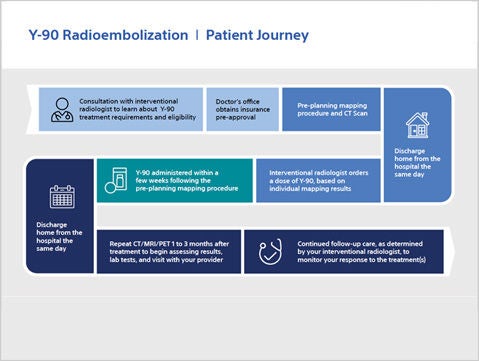

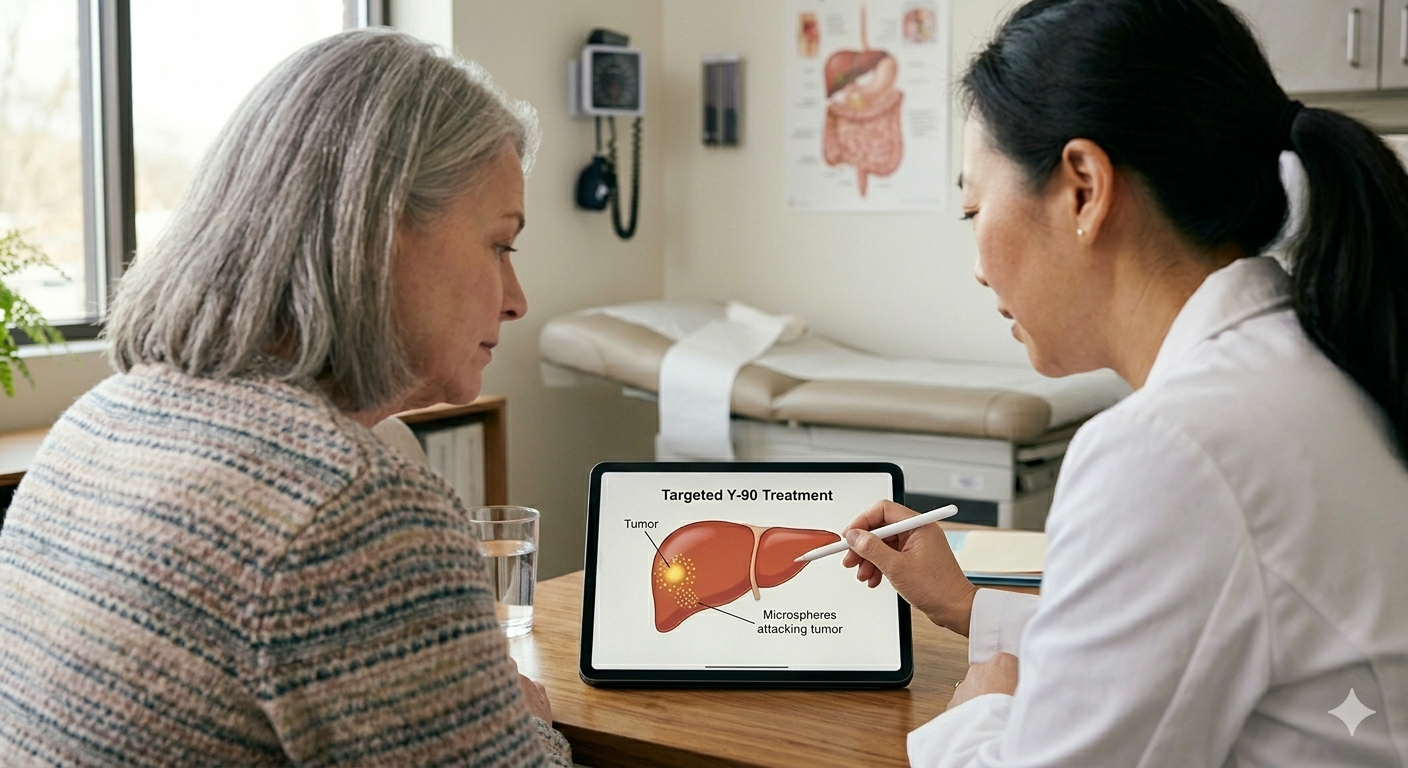
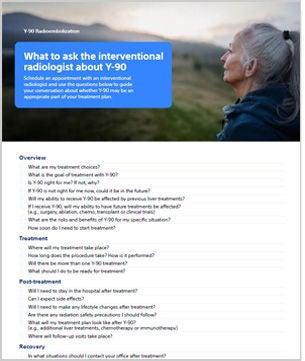
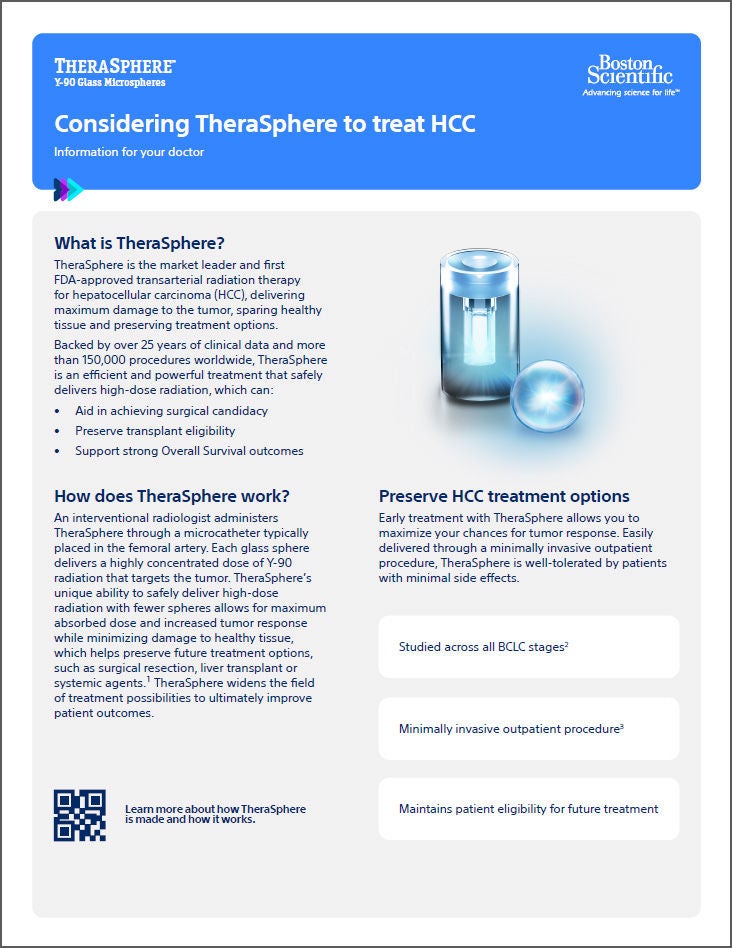
Patient FAQs
TheraSphere is a treatment for hepatocellular carcinoma that delivers targeted Y-90 radiation directly to tumors in the liver.

During the procedure, an interventional radiologist will deliver TheraSphere to the liver tumor through a small tube called a microcatheter. Each glass bead delivers a highly concentrated dose of Y-90 radiation that works to eliminate the HCC liver tumor. The radiation destroys the cancer cells within the tumor, with little damage to the surrounding healthy liver.
The goal of TheraSphere is to eliminate liver tumors by delivering radiation directly to the cancer while protecting as much healthy liver tissue as possible. TheraSphere may slow or stop tumor growth, help make a patient eligible for surgery or potentially even be a curative treatment. Your doctor can specifically address the role of TheraSphere for your unique condition.

Treatment with TheraSphere is typically an outpatient procedure that does not require a stay in the hospital.

While patients may experience a variety of symptoms after TheraSphere treatment, the typical response is often described as common flu-like symptoms that may last for approximately one week. These symptoms may include mild to moderate fatigue, abdominal discomfort, and nausea.
While treatment with TheraSphere targets the liver tumor directly, doctors usually recommend staying 3 feet away from children, pregnant women and small animals for three days following treatment.

Each patient is unique and there may be medical reasons for restricting activity. Be sure to discuss with your doctor what level of activity is most appropriate for you following the procedure. However, there may be some exercise, driving or weight lifting restrictions for a few days following your procedure.

If you plan to travel following treatment, the security screening equipment at some airports may detect radiation from your TheraSphere. Ask your doctor if you need a letter explaining the treatment.

TheraSphere is covered by most major insurance providers. You may verify your individual coverage and benefits by calling the phone number on the back of your insurance card. Additionally, most hospitals will confirm your insurance coverage before the procedure.

Find a TheraSphere treatment center
Find a doctor who specializes in TheraSphere for the treatment of HCC

Support for living with HCC
Approximately 32,000-36,000 Americans will be diagnosed with HCC in 20261. There are resources, advocacy and support groups available. Below are several community organizations that may be helpful.
Note: By clicking the links below, you will be redirected to external websites. The content of these websites is not reviewed by Boston Scientific.

Follow us on Facebook
Check out the latest updates about TheraSphere Y-90 Glass Microspheres on our Facebook page.

References:
National Cancer Institute. Cancer Stat Facts: Liver and Intrahepatic Bile Duct Cancer. Surveillance, Epidemiology, and End Results (SEER) Program. Accessed May 13, 2026.
TheraSphere is a registered trademark of Theragenics Corporation used under license by Boston Scientific Medical Device Limited, a wholly owned indirect subsidiary of Boston Scientific Corporation.
Important Safety Information for TheraSphere
TheraSphere Microspheres are small radioactive glass beads that treat liver cancer. With all medical procedures, there are risks associated with the procedure and the use of the device. Although the radioactivity continues to go down over time, the glass beads will remain permanently in your liver. The risks include but are not limited to • Bleeding from the stomach or intestines • Fatigue (feeling very tired) • Fever • Infection • Loss of appetite • Mild abdominal discomfort • Nausea • Radiation damage to other locations (including but not limited to lungs, gallbladder, stomach, intestines) • Stomach or intestinal ulcer • Temporary changes in liver and blood tests • Vomiting. Rarely the treatment may cause worsening of your liver function that could lead to liver failure and death. Tell your doctor if side effects continue or get worse. Be aware that some side effects may last longer or, rarely, become permanent. Everyone responds differently to their treatment. These are not all the possible side effects you may feel. Contact your doctor if you experience any side effects. Be sure to talk with your doctor so that you thoroughly understand all of the risks and benefits associated with the use of the device. 97574929