

Take the quiz to see if you're eligible Start here
Older man outdoors wearing a yellow jacket.

Understanding Hepatocellular Carcinoma

Learn about an HCC diagnosis and potential treatment options.

What is HCC?

Hepatocellular carcinoma (HCC) is a cancer that begins in the liver. It develops when healthy liver cells start to multiply in overdrive in an effort to repair damage. However, this massive effort can sometimes do more harm than good, resulting in genetic mutation. In other words, cancer cells are produced instead of healthy cells.

Receiving a diagnosis of liver cancer can feel overwhelming—for both patients and those who care for them. Learning more about hepatocellular carcinoma (HCC), the most common type of primary liver cancer, can help you feel more informed and prepared to have meaningful conversations with your care team.

Understanding your diagnosis

Over time, HCC cells form a lump (or multiple lumps) in the liver. This is called a tumor. As it develops, the tumor recruits blood vessels to feed it. These blood vessels supply nutrients and oxygen to the tumor, allowing it to grow. If the tumor cells enter the blood stream, the tumor may spread to other parts of the body. This is called metastasis. HCC can form many small cancer tumors throughout the liver. This is seen most often in patients with cirrhosis (chronic liver damage). It can also begin as a single tumor that grows and spreads to other parts of the liver. HCC is different from liver cancers that spread to the liver from other parts of the body.

Doctor speaking with a patient during a consultation.

When HCC is found early and carefully managed, there may be multiple treatment options available.

Common symptoms of HCC

In its early stages, HCC may not cause noticeable symptoms. As the disease progresses, symptoms can vary from person to person and may include:

  • Persistent fatigue or weakness
  • Abdominal pain or discomfort, especially on the right side
  • Unexplained weight loss or loss of appetite
  • Feeling full quickly when eating
  • Swelling in the abdomen (ascites)
  • Yellowing of the skin or eyes (jaundice)
  • Nausea or vomiting

Because these symptoms can also be associated with other liver conditions, it’s important to talk to a healthcare provider if symptoms appear or worsen.

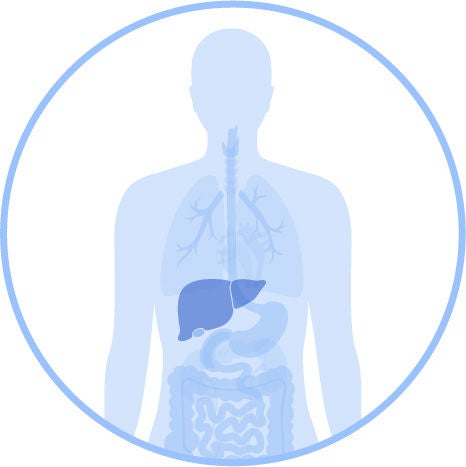
Illustration of human body showing the liver area.
Icon of person with heart beat.

How HCC is diagnosed

Hepatocellular Carcinoma is often diagnosed through a combination of imaging tests, blood tests, and a review of your medical history.

Common diagnostic tools include:

  • Imaging tests such as ultrasound, CT scans, or MRI to identify liver tumors
  • Blood tests, including alpha-fetoprotein (AFP), which may be elevated in some people with HCC
  • Liver function tests to assess how well the liver is working
  • Biopsy, in certain cases, to confirm the diagnosis

People with chronic liver disease may undergo regular screening, which can help detect HCC earlier—sometimes before symptoms appear.

Treatment options for HCC

Treatment for HCC is not one-size-fits-all. Your doctor will consider several factors, including the size and number of tumors, liver function, overall health, and whether the cancer has spread.

Because HCC begins in the liver, many patients are candidates for liver-directed therapies—treatments designed to focus on the tumor while limiting impact on the rest of the body.


therasphere icon.

Liver-directed therapies

These outpatient or minimally invasive procedures are often performed by interventional radiologists and may include:

  • Targeted radiation treatments like TheraSphere delivered directly to liver tumors
  • Ablation therapies that use heat or other methods to treat tumors
  • Embolization procedures that reduce blood flow to the tumor

For some patients, liver-directed treatments can help control the disease, manage symptoms, and in certain cases, make additional treatment options possible.

icon of liver.

Surgery

Surgery may be an option if the cancer is found early and the rest of your liver is working well.

  • Liver resection removes the part of the liver that contains the tumor. The remaining healthy liver can often grow back over time.
  • Liver transplant replaces your diseased liver with a healthy donor liver. This treats both the cancer and underlying liver disease (such as cirrhosis).
  • Not everyone is a candidate for surgery. Your care team will consider tumor size, number of tumors, liver function, overall health, and whether the cancer has spread.
Checkmark in a circle icon.

Systemic therapies

Systemic therapy uses medication that travels through the bloodstream to treat cancer cells throughout the body. It is often used when surgery or localized treatments are not possible.

  • Targeted therapy treatments focus on specific pathways that help cancer grow. These medicines can slow tumor growth and are usually taken by mouth.
  • Immunotherapy helps your immune system recognize and attack cancer cells. It is typically given through an IV infusion.
  • Combination therapy (such as immunotherapy plus targeted therapy) is used as a treatment for certain patients.

Treatment choice depends on liver function, overall health, prior treatments, and tumor characteristics.


icon

Important facts about HCC

HCC accounts for the majority of primary liver cancers.

  • Most cases of HCC develop in people with underlying liver disease or cirrhosis.
  • Early detection can expand treatment options and improve outcomes.
  • Advances in liver-directed therapies and systemic treatments have increased options for many patients.
  • Care for HCC often involves a multidisciplinary team, including hepatologists, oncologists, surgeons, and interventional radiologists.


Monitor icon displaying check marks.

Take the next step

If you or a loved one has been diagnosed with hepatocellular carcinoma (HCC), know that you are not alone. A brief quiz can help you understand whether liver-directed therapy may be an option to discuss with your care team.

Person walking on a wooded path.

References:

Llovet JM, Kelley RK, Villanueva A, Singal AG, Pikarsky E, Roayaie S, Lencioni R, Koike K, Zucman-Rossi J, Finn RS. Hepatocellular carcinoma. Nat Rev Dis Primers. 2021 Jan 21;7(1):6. doi: 10.1038/s41572-020-00240-3. Erratum in: Nat Rev Dis Primers. 2024 Feb 12;10(1):10. doi: 10.1038/s41572-024-00500-6. PMID: 33479224. 

de Mattos AZ, Bombassaro IZ, Vogel A, Debes JD. Hepatocellular carcinoma-the role of the underlying liver disease in clinical practice. World J Gastroenterol 2024; 30(19): 2488-2495 [PMID: 38817660 DOI: 10.3748/wjg.v30.i19.2488]

TheraSphere is a registered trademark of Theragenics Corporation used under license by Boston Scientific Medical Device Limited, a wholly owned indirect subsidiary of Boston Scientific Corporation.